


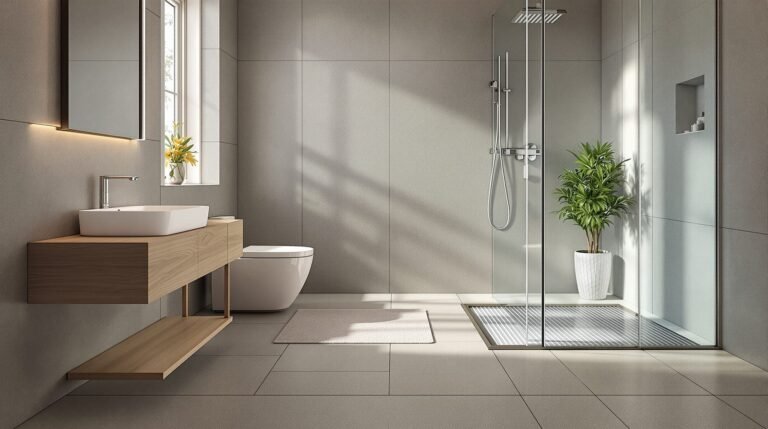
When to use tile only in wet zones and vinyl elsewhere
A practical guide to mixing porcelain or ceramic in bathrooms, laundry, and entries with vinyl plank in the rest of the home. Not every room in a house asks the same thing of a floor. A shower sees standing water. A mudroom sees salt and wet boots. A bedroom sees socks and a dresser. Treating every square foot as if it were a wet room is one kind of mistake. Treating a bathroom floor like a bedroom is another. Mixing tile in wet zones with vinyl everywhere else is one of the most common — and most sensible — flooring plans in Canadian homes and condos. It is not a compromise by default. It is a way to put the right material where moisture, impact, and cleaning matter most, and a quieter, warmer, often cheaper surface where they do not. This article explains when that split works, when it looks cheap, and how to plan transitions, height, sound, and colour so the house still reads as one home. What counts as a wet zone Wet zone is not a marketing term. It is any floor that regularly sees liquid, steam, or grit that arrives with water. Kitchens sit on the line. Many households put vinyl through the kitchen because it is warmer underfoot and easier to install over an imperfect subfloor. Others tile the kitchen because grease, dropped pans, and standing water near the sink punish a floating floor. Both can be right. The rest of this guide treats kitchens as optional wet zones, not automatic ones. Living rooms, dining rooms, bedrooms, and most hallways are dry zones. They need comfort, acoustics, and a look that can run in long sightlines. That is where vinyl plank usually earns its place. What tile does better in wet rooms Tile — especially floor-rated porcelain — does not swell when it gets wet. A properly set porcelain floor with a sound membrane in a shower is a waterproof assembly, not just a waterproof face. Vinyl plank is water-resistant. That is not the same thing. Standing water at a seam, a cut around a toilet flange, or a slow leak under a vanity can still damage the core of many vinyl products and the subfloor beneath them. Tile also takes impact and grit better. Sand and winter salt act like sandpaper on a vinyl wear layer. In an entry that is used every day from November to April, porcelain or a dense mosaic will still look like a floor after the vinyl in the same doorway has gone cloudy. Cleaning is different too. You can wet-mop tile without worrying about water sitting in a click joint. You can use hotter water. You can live with a dog that shakes off in the hall. Grout is the maintenance cost. Choose a grout colour close to the tile and a product that resists stains, and that cost stays reasonable. Heat is another point. Tile over electric or hydronic heat is a standard, comfortable wet-room floor. Many vinyl products have limits on surface temperature. If you want a warm bathroom in January, tile is usually the cleaner specification. What vinyl does better everywhere else Vinyl plank is faster to install, kinder on an uneven wood subfloor, and quieter underfoot than tile on a slab. In bedrooms and living rooms that is not a small thing. Tile is hard. It reflects sound. In an upstairs hall or a condo living room, a floating vinyl floor with a proper underlayment is often the more livable choice. Vinyl is also better when you need one continuous look across a large dry floor without paying for flattening, thinset, and grout. Open-concept living-dining spaces photograph well in wood-look vinyl because the planks run in one direction and there are no grout lines to break the surface. Cost matters. Material plus labour for vinyl through bedrooms and halls is usually lower than tile through the same rooms. Putting that money into a better porcelain in the bathroom and entry is often a smarter split than a mid-grade tile everywhere. Height and doors matter in renovations. Vinyl assemblies are often thinner than tile plus mortar plus membrane. If you are keeping existing doors and trying not to build a ramp at every threshold, vinyl in the dry rooms can save a lot of carpentry. When the mix is the right plan Use tile only in wet zones and vinyl elsewhere when most of the following are true. This plan is especially strong in two-storey houses. Tile the ground-floor powder room, mudroom, and foyer. Use vinyl on the second floor. The wet work stays where boots and showers are. The sleeping floor stays quiet. It is also strong in finished basements when the bathroom and laundry sit on the slab and the rec room does not need a hard, cold floor. Tile the wet rooms. Use vinyl in the lounge, with a transition at the bathroom door. […]